Kneeling Plank: Proper Form, Core Benefits, Sets, Tips & FAQ
Learn the Kneeling Plank to build beginner-friendly core stability, improve posture, and train anti-extension strength with safe form and tips.
Kneeling Plank
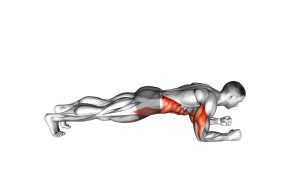
The kneeling plank works best when you treat it as a full-body tension drill. Your elbows press into the floor, your ribs stay controlled, your glutes stay lightly active, and your stomach braces as if you are preparing for gentle pressure. Because the knees remain on the ground, this variation is ideal for beginners, warm-ups, rehabilitation-style core practice, and anyone who needs to build plank strength gradually.
Although the movement looks simple, the details matter. A good kneeling plank should feel stable through the front of the core, not stressful in the lower back. In addition, your neck should stay neutral, your shoulders should remain stacked over your elbows, and your breathing should stay controlled. When these points are respected, the exercise becomes an excellent foundation for stronger plank variations.
Quick Overview
| Body Part | Core |
|---|---|
| Primary Muscle | Rectus abdominis and transverse abdominis |
| Secondary Muscle | Obliques, glutes, shoulders, serratus anterior, and quadriceps |
| Equipment | Bodyweight only; optional exercise mat for knee and elbow comfort |
| Difficulty | Beginner |
Sets & Reps (By Goal)
- Beginner core activation: 2–3 sets × 15–25 seconds, resting 45–60 seconds between sets.
- Posture and bracing practice: 2–4 sets × 20–30 seconds with slow nasal breathing and controlled tension.
- Core endurance: 3–4 sets × 30–45 seconds while keeping the hips level and the spine neutral.
- Warm-up before strength training: 1–2 sets × 15–30 seconds at moderate effort.
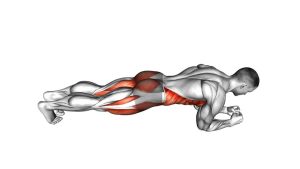
- Progression toward full plank: 3 sets × 30–45 seconds before gradually moving to a toe-supported plank.
Progression rule: Add time only when your form stays clean. If your hips sag, your lower back arches, or your shoulders collapse, shorten the hold and rebuild control first.
Setup / Starting Position
- Place your forearms on the floor: Set your elbows directly under your shoulders. Keep your forearms parallel or bring your hands together lightly if that feels more stable.
- Position your knees behind your hips: Keep both knees on the ground. The farther your knees move back, the harder the exercise becomes.
- Create a straight line: Align your head, shoulders, hips, and knees. Avoid sitting the hips back toward the heels.
- Brace your core: Gently tighten your stomach as if preparing for a light punch. At the same time, keep your ribs from flaring upward.
- Engage your glutes: Squeeze lightly to prevent the pelvis from tipping forward and the lower back from arching.
- Keep your neck neutral: Look down at the floor. Your chin should stay slightly tucked, not lifted forward.
Setup tip: If your knees feel uncomfortable, place a folded mat or towel underneath them. Comfort helps you focus on core tension instead of joint pressure.
Execution (Step-by-Step)
- Start on your forearms and knees: Stack your elbows below your shoulders and place your knees on the floor behind your hips.
- Lengthen your body: Move your hips forward until your body forms a clean diagonal line from your head to your knees.
- Brace before holding: Tighten your abs, draw your ribs slightly down, and lightly squeeze your glutes.
- Press the floor away: Push through your forearms so your chest does not sink between your shoulders.
- Hold the position: Keep your hips level, your neck neutral, and your breathing steady throughout the hold.
- Control your breathing: Inhale through the nose if possible, then exhale slowly without losing abdominal tension.
- Finish with control: Lower your hips back or rest on your knees only after the target time is complete.
Pro Tips & Common Mistakes
Pro Tips
- Think “ribs down, hips level”: This cue helps keep your core engaged and your lower back protected.
- Push through the forearms: Active pressure into the floor improves shoulder stability and prevents chest collapse.
- Use controlled breathing: Smooth breathing builds endurance without forcing you to relax the brace completely.
- Keep the glutes lightly active: This supports pelvic position and reduces unnecessary lumbar extension.
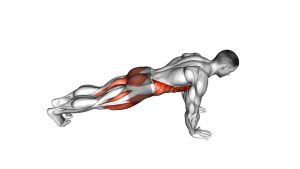
- Make the lever longer to progress: Move the knees slightly farther back before switching to a full plank from the toes.
Common Mistakes
- Letting the hips sag: This shifts stress into the lower back and reduces core effectiveness.
- Lifting the hips too high: A high-hip position makes the plank easier but removes tension from the target muscles.
- Holding the breath: Breath-holding can increase tension too much and make the exercise harder to control.
- Looking forward: Lifting the head can strain the neck. Keep the gaze down instead.
- Relaxing the shoulders: If the chest sinks, the shoulders may feel overloaded. Press the ground away.
- Chasing long holds too early: Quality matters more than time. Stop before your form breaks down.
FAQ
Is the kneeling plank good for beginners?
Yes. The kneeling plank is one of the best beginner plank variations because it shortens the body lever and reduces total load. As a result, you can learn proper bracing, shoulder position, and hip alignment before moving to a full plank.
Where should I feel the kneeling plank?
You should feel the exercise mainly through your abs and deep core. You may also feel your shoulders, glutes, and front thighs working lightly. However, you should not feel sharp pressure in your lower back or neck.
How long should I hold a kneeling plank?
Most beginners should start with 15–25 seconds per set. Once you can hold that time with clean form, gradually build toward 30–45 seconds. After that, you can progress to harder plank variations.
Is a kneeling plank easier than a regular plank?
Yes. Because the knees stay on the floor, the body lever is shorter and the core does not need to resist as much force. Even so, the exercise still trains important anti-extension strength when performed correctly.
Can kneeling planks help with posture?
They can support better posture by improving core control, rib position, and trunk stability. For best results, combine kneeling planks with upper-back exercises, hip mobility, and daily posture awareness.
When should I progress from kneeling plank to full plank?
Progress when you can hold the kneeling plank for 30–45 seconds without hip sagging, lower-back arching, shoulder collapse, or breath-holding. Move gradually, and return to the kneeling version whenever your form needs reinforcement.
Recommended Equipment (Optional)
- Thick Exercise Mat — provides comfort for knees and elbows during plank holds.
- Yoga Knee Pad — adds extra cushioning if your knees feel pressure on hard floors.
- Forearm Plank Pad — helps reduce elbow discomfort during longer core holds.
- Resistance Bands Set — useful for pairing kneeling planks with core and glute activation drills.
- Ab Wheel Roller — a progression tool for advanced anti-extension core strength after plank control improves.
Equipment tip: The kneeling plank does not require equipment, but a supportive mat can make the exercise easier to practice consistently, especially on hard flooring.