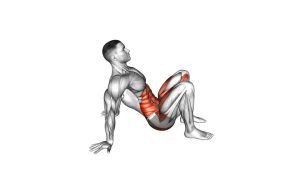
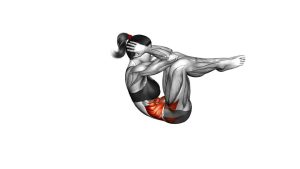
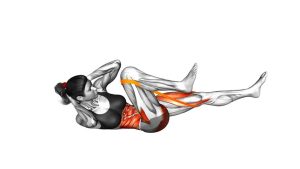
Quarter Sit-Up: Proper Form, Core Benefits, Sets, Tips & FAQ
Learn the Quarter Sit-Up for controlled core activation, stronger abs, and beginner-friendly trunk flexion with proper form, sets, tips, and FAQs.
Quarter Sit-Up
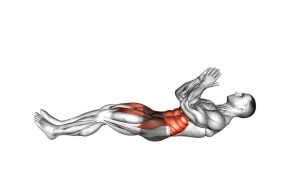
This exercise is best used when you want to build abdominal awareness without relying on momentum. Because the range of motion is small, every repetition should feel deliberate and controlled. In addition, the quarter sit-up helps beginners learn how to flex the trunk while keeping the hips and lower body quiet. For better results, move slowly, exhale during the lift, and return to the floor with control.
Quick Overview
| Body Part | Core |
|---|---|
| Primary Muscle | Rectus abdominis |
| Secondary Muscle | Obliques, deep core stabilizers, hip flexors lightly |
| Equipment | No equipment required; exercise mat optional |
| Difficulty | Beginner |
Sets & Reps (By Goal)
- Beginner core activation: 2–3 sets × 8–12 reps with slow control
- Ab endurance: 3–4 sets × 12–20 reps with steady breathing
- Warm-up preparation: 1–2 sets × 8–10 reps before core training
- Tempo control: 2–3 sets × 6–10 reps using a 2-second lift and 3-second lowering phase
Progression rule: First, improve control and breathing. Then, add reps or slow the lowering phase. Finally, progress to a longer-range sit-up only when your neck and lower back stay comfortable.
Setup / Starting Position
- Lie on your back: Start on a mat or comfortable floor surface.
- Bend your knees: Keep both feet flat and grounded so the lower body stays stable.
- Set your torso: Keep your ribs controlled and your lower back steady against the floor.
- Position your head: Keep the neck long and avoid pushing the chin aggressively toward the chest.
- Brace gently: Before moving, tighten the abs lightly as if preparing to lift the shoulders.
Tip: Since this is a short-range exercise, your setup matters. Therefore, begin each rep from a calm, stable position instead of rushing into the lift.
Execution (Step-by-Step)
- Prepare your breath: Inhale gently while staying relaxed on the floor.
- Begin the curl: Exhale and lift your head, shoulders, and upper back slightly from the floor.
- Keep the range short: Stop before the lower back starts to leave the ground.
- Squeeze the abs: Pause briefly at the top while keeping the feet flat and the hips quiet.
- Lower slowly: Return the upper back, shoulders, and head to the floor with control.
- Reset before repeating: Avoid bouncing; instead, rebuild tension before the next rep.
Pro Tips & Common Mistakes
- Use your abs, not momentum: Lift smoothly instead of throwing the head or shoulders upward.
- Keep the lower back stable: Because the exercise is short, the low back should not peel off the floor.
- Do not pull on the neck: If your hands are near your head, keep them light and relaxed.
- Exhale during the lift: This helps the ribs come down and improves abdominal contraction.
- Avoid rushing the descent: Lowering slowly increases control and keeps tension on the abs.
- Keep your feet planted: If the feet move, reduce speed and focus on trunk control.
- Stay within a pain-free range: More height is not always better; cleaner reps are more useful.
FAQ
What is a quarter sit-up?
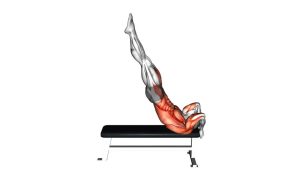
A quarter sit-up is a short-range sit-up variation where you lift only the head, shoulders, and upper back slightly from the floor. Therefore, it targets the abs without requiring the full range of a traditional sit-up.
Is the quarter sit-up good for beginners?
Yes. Because the movement is smaller and easier to control, it is a useful beginner core exercise. However, beginners should still move slowly and avoid pulling on the neck.
Where should I feel the quarter sit-up?
You should feel the exercise mainly in the front of your abdomen, especially the rectus abdominis. Additionally, the obliques may help stabilize the trunk during the lift.
How is it different from a full sit-up?
A full sit-up brings the torso much higher and usually involves more hip flexor contribution. In contrast, the quarter sit-up keeps the range short and focuses more on controlled abdominal flexion.
Should my lower back leave the floor?
No. During this version, the lower back should stay steady while only the upper torso curls upward. If your lower back lifts, the movement has likely become too large.
Recommended Equipment (Optional)
- Exercise Mat — adds comfort and support for floor-based ab exercises
- Thick Yoga Mat — useful if you need extra cushioning for the spine and hips
- Ab Exercise Mat — supports comfortable core training and repeated floor work
- Core Sliders — helpful for adding other beginner-friendly core variations
- Foam Roller — useful for warm-ups, mobility work, and post-training recovery
Tip: Equipment is optional for this exercise. However, a supportive mat can make the movement more comfortable, especially when practicing several sets on a hard floor.