Spiderman Plank: Proper Form, Core Benefits, Sets, Tips & FAQ
Learn the Spiderman Plank to build core strength, oblique control, hip mobility, and plank stability with step-by-step form, tips, FAQs, and gear.
Spiderman Plank
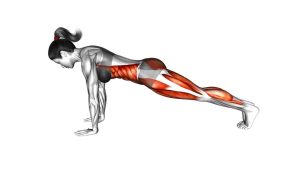
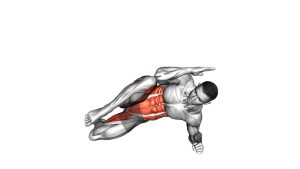
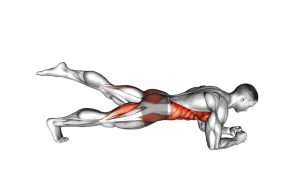
This exercise works best when the knee moves with control rather than speed. In the video, the body stays in a forearm plank while the knee travels diagonally outside the torso toward the elbow. Therefore, the goal is not to rush the reps. Instead, brace your core, keep your shoulders stable, and move each leg smoothly without letting the hips sag or twist.
Quick Overview
| Body Part | Core |
|---|---|
| Primary Muscle | Rectus abdominis and obliques |
| Secondary Muscle | Hip flexors, glutes, quadriceps, shoulders, and deep core stabilizers |
| Equipment | No equipment required; exercise mat optional |
| Difficulty | Intermediate because it requires plank strength, hip control, and anti-rotation stability |
Sets & Reps (By Goal)
- Core control: 2–3 sets × 6–8 reps per side with slow, clean movement
- Muscular endurance: 3–4 sets × 8–12 reps per side with steady breathing
- Conditioning finisher: 3–5 rounds × 20–40 seconds while keeping strict plank alignment
- Beginner progression: 2 sets × 4–6 reps per side with a smaller knee drive
Progression rule: Add reps only when your elbows stay fixed, your spine remains neutral, and your hips do not bounce or rotate.
Setup / Starting Position
- Start on your forearms: Place both elbows under your shoulders and keep your forearms on the floor.
- Extend both legs: Step your feet back until your body forms a straight line from head to heels.
- Brace your core: Gently tighten your abs as if preparing to resist movement through the torso.
- Set your hips: Keep the hips level with the shoulders rather than dropping them toward the floor.
- Keep your head neutral: Look slightly down so the neck stays aligned with the spine.
Your starting position should look like a strong forearm plank before the knee drive begins.
Execution (Step-by-Step)
- Hold the plank: Press your forearms into the floor and keep your shoulders steady.
- Drive one knee outward: Bring one knee forward and slightly outside the torso toward the same-side elbow.
- Pause briefly: Reach the closest comfortable point without forcing the knee to touch the elbow.
- Return with control: Extend the leg back to the starting plank position without dropping the hips.
- Switch sides: Repeat the same outward knee drive with the opposite leg.
- Continue alternating: Move side to side with a smooth tempo while keeping the torso stable.
Pro Tips & Common Mistakes
- Keep the elbows planted: Do not let the upper body slide forward or backward during the knee drive.
- Move diagonally: The knee should travel outward toward the same-side elbow, not straight under the chest.
- Control the hips: Avoid rocking side to side because the exercise is meant to challenge anti-rotation strength.
- Do not rush: Fast reps often reduce core tension and turn the movement into a sloppy mountain climber.
- Keep the neck neutral: Do not look too far forward or tuck the chin aggressively.
- Brace before moving: A strong plank comes first; the knee drive comes second.
- Use a smaller range when needed: If the full knee drive breaks your plank, reduce the distance and rebuild control.
FAQ
What muscles does the Spiderman Plank work?
The Spiderman Plank mainly works the abs and obliques. It also trains the hip flexors, glutes, quadriceps, shoulders, and deep stabilizing muscles because the body must hold a plank while one leg moves.
Is the Spiderman Plank good for abs?
Yes. It is especially useful for building core stability because the abs must resist sagging, twisting, and shifting during each alternating knee drive.
Should my knee touch my elbow?
Not necessarily. In the video, the knee moves close to the elbow, but the main goal is controlled movement. If forcing contact causes hip rotation or back arching, use a smaller range of motion.
Is this the same as a mountain climber?
No. A mountain climber usually uses a faster forward knee drive. However, the Spiderman Plank uses a slower outside knee path toward the same-side elbow while the torso stays stable.
Can beginners do the Spiderman Plank?
Beginners can try a reduced-range version, but they should first be able to hold a steady forearm plank. If the hips drop or the shoulders collapse, practice regular planks before progressing.
Recommended Equipment (Optional)
- Exercise Mat — adds forearm comfort and improves floor grip during plank work
- Core Sliders — useful for advanced sliding plank and knee-drive variations
- Resistance Bands Set — helpful for warm-ups, glute activation, and core accessory training
- Foam Roller — useful for warm-up mobility around the hips, quads, and upper back
- Push-Up Handles — optional tool for related high-plank variations and wrist-friendly core work
Tip: The Spiderman Plank does not require equipment. However, a supportive mat can make the forearm position more comfortable and help you maintain clean technique.