Knee Tuck Oblique Crunch: Core Form, Oblique Tips & Sets
Learn the Knee Tuck Oblique Crunch for stronger abs and obliques. Step-by-step form, sets, tips, mistakes, FAQs, and equipment.
Knee Tuck Oblique Crunch
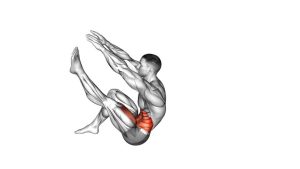
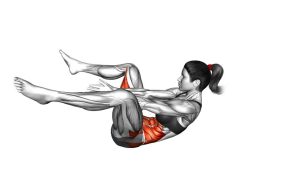
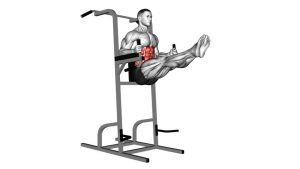
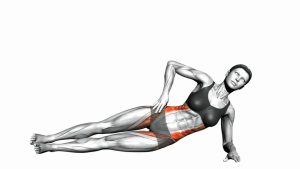
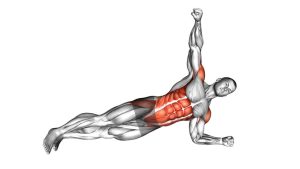
This exercise works best when the motion stays smooth, compact, and controlled. Because both legs remain active during the movement, your core must resist dropping, twisting too aggressively, or using momentum. Therefore, the goal is not speed. Instead, focus on drawing one knee inward, rotating the upper body toward that side, and extending the opposite leg without letting the lower back lose control.
Quick Overview
| Body Part | Core |
|---|---|
| Primary Muscle | Rectus abdominis and obliques |
| Secondary Muscle | Hip flexors, transverse abdominis, and deep core stabilizers |
| Equipment | No equipment required; exercise mat optional |
| Difficulty | Beginner to Intermediate |
Sets & Reps (By Goal)
- Core endurance: 2–3 sets × 12–20 total reps with steady control.
- Oblique focus: 3–4 sets × 8–12 reps per side with a brief squeeze at the top.
- Beginner control: 2 sets × 6–10 reps per side with a smaller range of motion.
- Conditioning finisher: 2–3 rounds × 30–45 seconds while maintaining clean form.
Progression rule: First increase control and range. Then, add reps or time. However, do not progress by moving faster if your torso starts swinging or your lower back arches.
Setup / Starting Position
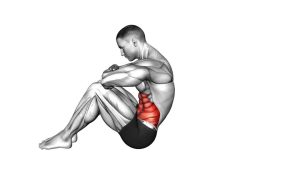
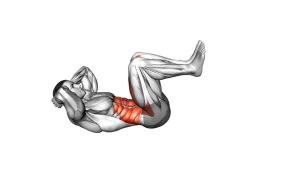
- Lie on your back: Start on the floor with your upper body slightly lifted.
- Brace your core: Keep your abs active before the first rep begins.
- Lift the legs: Extend both legs outward and keep them hovering above the floor.
- Position your hands: Keep the hands near the head or lightly positioned for balance without pulling the neck.
- Set your posture: Keep your chest open enough to rotate, but avoid over-arching the lower back.
Tip: If the full hover position feels too hard, keep the extended leg higher. This reduces strain while still training the same pattern.
Execution (Step-by-Step)
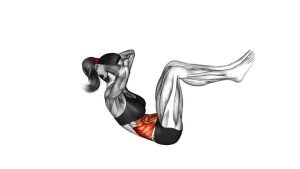
- Begin with tension: Keep both legs active and your upper body slightly lifted.
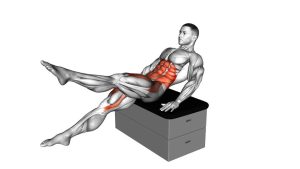
- Drive one knee inward: Bend one knee and bring it toward the torso in a controlled path.
- Rotate toward the knee: Turn your upper body toward the incoming knee as the knee travels inward.
- Keep the opposite leg extended: Maintain the opposite leg in a long, elevated position without resting it on the floor.
- Squeeze briefly: At the top, pause for a moment as the abs and obliques contract.
- Return with control: Extend the bent leg back out while the torso rotates toward center.
- Switch sides: Repeat the same pattern on the opposite side in a smooth alternating rhythm.
Pro Tips & Common Mistakes
- Rotate from the torso: Do not simply pull the elbow forward. Instead, turn the rib cage toward the knee.
- Keep the movement compact: A smaller controlled rep is better than a large swinging rep.
- Avoid neck pulling: Keep the hands light and let the core lift the upper body.
- Control the extended leg: Do not let the straight leg drop if your lower back starts to arch.
- Use steady breathing: Exhale as the knee tucks in and inhale as you return to center.
- Do not rush the switch: Each side should have a clear tuck, rotation, and controlled return.
- Keep tension continuous: Avoid resting the feet or shoulders between reps unless you need to reset form.
FAQ
What muscles does the Knee Tuck Oblique Crunch work?
It mainly works the abs and obliques. Additionally, the hip flexors and deep core stabilizers help keep the legs elevated and the pelvis controlled.
Is the Knee Tuck Oblique Crunch the same as a bicycle crunch?
It is similar, but it is usually more controlled and focused on a knee tuck with torso rotation. A bicycle crunch often uses a faster cycling rhythm, while this version should keep the contraction more deliberate.
Should my lower back stay flat during the exercise?
Your lower back should stay controlled and supported. If it arches strongly, raise the extended leg higher, reduce the range, or pause between reps until your core can stabilize the movement.
Can beginners do this exercise?
Yes, beginners can perform it with a smaller range of motion. However, they should move slowly, keep the legs higher, and stop before the lower back or neck takes over.
How can I make the Knee Tuck Oblique Crunch harder?
You can slow the tempo, pause longer at the top, extend the legs farther, or keep the feet lower. Nevertheless, only progress if your back stays stable and your reps remain controlled.
Recommended Equipment (Optional)
- Exercise Mat — provides floor comfort and helps protect the lower back during core work.
- Thick Yoga Mat — useful if you need extra cushioning for the spine, hips, and shoulders.
- Core Sliders — helpful for related knee tuck and mountain climber variations.
- Adjustable Ankle Weights — optional progression tool for advanced users who already control the movement well.
- Foam Roller — useful for warm-ups, mobility work, and post-core-session recovery.
Tip: Equipment is optional. However, a supportive mat can make the exercise more comfortable and help you stay focused on clean core control.