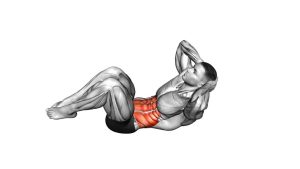
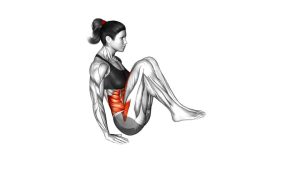
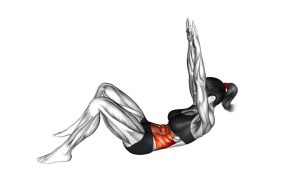
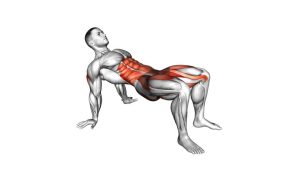
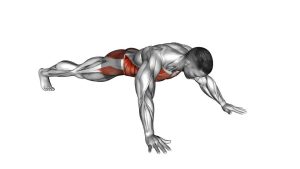
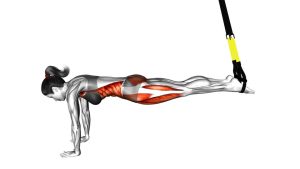
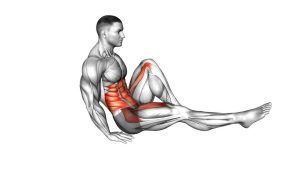
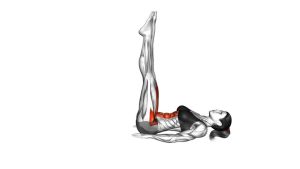
Lying Leg Circle Hip Raise: Lower Abs Form, Benefits, Sets & Tips
Learn the Lying Leg Circle Hip Raise for lower abs, obliques, and hip control. Includes setup, steps, sets, mistakes, FAQs, and gear.
Lying Leg Circle Hip Raise
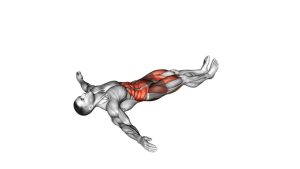
This exercise is best used when you already have basic control in lying leg raises and reverse crunches. Because the legs stay extended and move in a circular path, the core must resist arching, twisting, and momentum. Keep each circle smooth and compact. If your lower back lifts too much, reduce the range or bend the knees slightly until your control improves.
Quick Overview
| Body Part | Core |
|---|---|
| Primary Muscle | Rectus abdominis, especially lower abdominal fibers |
| Secondary Muscle | Obliques, hip flexors, transverse abdominis, pelvic stabilizers |
| Equipment | No equipment required; optional exercise mat |
| Difficulty | Intermediate; advanced if performed with straight legs and slow circles |
Sets & Reps (By Goal)
- Core control: 2–3 sets × 6–8 circles per direction with slow tempo
- Lower-ab strength: 3–4 sets × 8–12 total reps with a small hip raise each rep
- Oblique stability: 2–3 sets × 5–8 clockwise circles + 5–8 counterclockwise circles
- Advanced core endurance: 3 sets × 20–30 seconds of continuous controlled circles
Progression rule: First improve control and range. Then increase reps. Only make the circles larger when your lower back stays stable and your hips lift with clean abdominal tension.
Setup / Starting Position
- Lie on your back: Use a flat floor or exercise mat. Keep your head, shoulders, and upper back relaxed.
- Place your arms beside you: Keep palms down for support. Press lightly into the floor without pushing aggressively.
- Set your pelvis: Brace your abs and gently flatten the lower back toward the floor.
- Extend your legs: Keep both legs together and raise them off the ground. Start with a moderate angle that you can control.
- Prepare for the circle: Keep the ribs down, toes pointed or neutral, and avoid swinging before the first rep.
If straight legs are too difficult, bend your knees slightly. The exercise should remain controlled from the first rep to the last.
Execution (Step-by-Step)
- Brace your core: Exhale slightly and tighten your abs before moving the legs.
- Lift the legs toward vertical: Raise both legs together without jerking or using momentum.
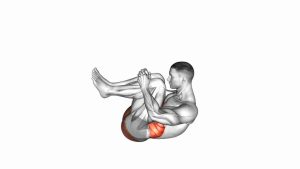
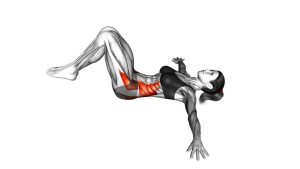
- Raise the hips: At the top, curl the pelvis upward and lift the hips slightly off the floor like a small reverse crunch.
- Begin the circle: Lower the hips with control and guide both legs into a small circular path.
- Complete the leg circle: Move the legs outward, downward, inward, and back up while keeping the core braced.
- Repeat smoothly: Each time the legs return upward, add a controlled hip raise before continuing the next circle.
- Switch direction: After the target reps, reverse the circle direction to train both sides evenly.
Pro Tips & Common Mistakes
- Keep the circles small: Large circles often create lower-back arching and hip flexor dominance.
- Do not drop the legs: Lower slowly and stop before your back loses contact with the floor.
- Lift the hips, not the whole back: The hip raise should be small and controlled.
- Avoid swinging: Momentum reduces abdominal tension and makes the exercise less effective.
- Keep the neck relaxed: Do not lift your head or strain your jaw while the legs move.
- Breathe with control: Exhale during the hip raise and maintain steady breathing through the circle.
- Use bent knees if needed: A slightly bent-knee version is better than a straight-leg version with poor control.
FAQ
What muscles does the Lying Leg Circle Hip Raise work?
It mainly targets the lower abs through the hip raise and leg-lift pattern. The obliques and deep core also work hard to control the circular leg motion and prevent the pelvis from rotating.
Is the Lying Leg Circle Hip Raise beginner-friendly?
It is better for intermediate users because the straight-leg circle requires strong core control. Beginners can modify it by bending the knees, making smaller circles, or practicing regular lying leg raises first.
Should my lower back stay on the floor?
Your lower back should stay controlled and close to the floor during the circle. A small pelvic curl happens during the hip raise, but you should avoid excessive arching during the lowering phase.
How big should the leg circles be?
Start with small circles. The circle should only be as large as you can control without swinging, arching the back, or twisting the hips.
Can I do this exercise every day?
You can use it often if volume is low and your lower back feels good. For harder sets, 2–4 times per week is usually enough for quality core training.
Recommended Equipment (Optional)
- Thick Exercise Mat — adds comfort for the spine and hips during floor-based core work
- Non-Slip Yoga Mat — helps keep the body stable while performing controlled leg circles
- Adjustable Ankle Weights — advanced option for increasing resistance after mastering bodyweight form
- Core Sliders — useful for building core control with related floor exercises
- Resistance Bands Set — helpful for adding lower-ab, hip-flexor, and core stability variations
Tip: Equipment is optional. Master the bodyweight version first, then add resistance only when your hips lift cleanly and your back stays controlled.