Alternate Leg Reach Crunch: Form, Benefits, Sets, Tips & FAQ
Learn the Alternate Leg Reach Crunch to train abs, hip flexors, and core control with step-by-step form, sets, mistakes, FAQs, and gear.
Alternate Leg Reach Crunch
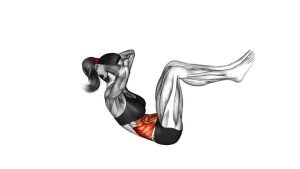
This movement is useful for building stronger abs because it combines a controlled crunch with a single-leg raise. The goal is not to swing fast or force the reach. The goal is to lift the torso with abdominal control, keep the opposite leg steady, and return to the floor without losing tension.
Quick Overview
| Body Part | Abs |
|---|---|
| Primary Muscle | Rectus abdominis |
| Secondary Muscle | Hip flexors, obliques, deep core stabilizers, quadriceps |
| Equipment | No equipment required; optional exercise mat |
| Difficulty | Beginner to Intermediate |
Sets & Reps (By Goal)
- Beginner core control: 2–3 sets × 6–8 reps per side, slow and controlled.
- Ab strength and endurance: 3–4 sets × 10–12 reps per side, with steady breathing.
- Core conditioning: 3–5 sets × 30–45 seconds, alternating sides continuously.
- Warm-up activation: 1–2 sets × 6–10 reps per side before a core or full-body workout.
Progression rule: First improve control, then increase reps. Do not progress by swinging faster. A clean rep should include a smooth lift, a brief reach, and a controlled return.
Setup / Starting Position
- Lie on your back: Use a flat surface or exercise mat. Extend both legs straight in front of you.
- Reach arms overhead: Keep your arms long without forcing your shoulders into discomfort.
- Brace the core: Lightly tighten your abs so your lower back stays controlled.
- Keep the neck neutral: Avoid pulling the chin hard toward the chest before the crunch begins.
- Prepare to alternate: One leg will lift as your torso crunches upward, then you will switch sides on the next rep.
Tip: If your lower back arches too much, keep the non-working leg slightly bent or reduce how low it travels.
Execution (Step-by-Step)
- Start long: Begin with arms overhead and legs extended on the floor.
- Lift one leg: Raise one straight leg toward the ceiling while keeping the opposite leg extended and controlled.
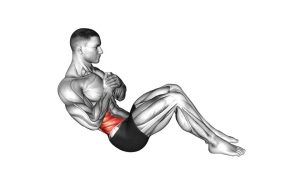
- Crunch upward: Curl your head, shoulders, and upper back off the floor using your abs.
- Reach toward the foot: Extend both hands toward the lifted leg without jerking the neck or using momentum.
- Pause briefly: Hold the top position for a moment and squeeze the abs.
- Lower with control: Return your torso, arms, and leg back to the starting position slowly.
- Switch sides: Repeat the same motion with the opposite leg.
Pro Tips & Common Mistakes
- Reach with control: Think about curling your ribs toward your pelvis instead of simply throwing your arms forward.
- Exhale at the top: Breathe out as you crunch and reach. This helps deepen abdominal contraction.
- Avoid neck pulling: Keep your hands reaching forward, not yanking the head upward.
- Control the lower back: If your back arches during the descent, shorten the range of motion.
- Do not rush the switch: Return fully before alternating sides to keep the exercise clean.
- Keep the opposite leg steady: The non-working leg should not bounce or swing wildly.
- Use a smaller range if needed: Reaching toward the shin instead of the foot is acceptable for beginners.
FAQ
What muscles does the Alternate Leg Reach Crunch work?
The main muscle worked is the rectus abdominis. The hip flexors assist with the leg raise, while the obliques and deep core muscles help stabilize the torso during the alternating motion.
Is the Alternate Leg Reach Crunch good for beginners?
Yes, it can be beginner-friendly when performed slowly with a controlled range of motion. Beginners can bend the knees slightly or reach toward the shin instead of the foot.
Should my lower back stay flat?
Your lower back should stay controlled and avoid excessive arching. A small natural curve is normal, but if the back lifts aggressively from the floor, reduce the range.
Is this the same as a single-leg V-up?
It is very similar to an alternating single-leg V-up, but the crunch version usually has a slightly smaller range and focuses more on controlled abdominal flexion than explosive movement.
How can I make this exercise harder?
You can slow down the lowering phase, pause longer at the top, keep the non-working leg hovering, or hold a light medicine ball. Only progress when your lower back and neck stay controlled.
Recommended Equipment (Optional)
- Exercise Mat — adds comfort and support for floor-based ab exercises.
- Non-Slip Yoga Mat — helps keep your body stable during alternating crunch movements.
- Adjustable Ankle Weights — optional progression for stronger lifters who can control the leg raise.
- Medicine Ball — useful for advanced reach-crunch variations and weighted core work.
- Core Sliders — helpful for pairing this exercise with plank, mountain climber, and ab rollout variations.
Tip: Start with bodyweight first. Add tools only when your reps stay smooth and your lower back remains controlled.