Seated Diagonal Knee Raise on Bench: Form, Sets, Tips & FAQ
Learn the Seated Diagonal Knee Raise on Bench to target abs, obliques, and hip flexors with controlled cross-body knee tucks.
Seated Diagonal Knee Raise on Bench
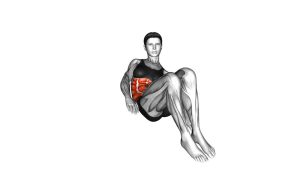
This exercise is useful for building abdominal control because it combines knee flexion, hip flexion, and a small diagonal crunch pattern. The bench gives your hands a stable base, which allows you to focus on clean knee movement instead of balance. Keep each repetition smooth, controlled, and compact.
Quick Overview
| Body Part | Core |
|---|---|
| Primary Muscle | Rectus abdominis and obliques |
| Secondary Muscle | Hip flexors, transverse abdominis, deep core stabilizers |
| Equipment | Flat bench |
| Difficulty | Beginner to intermediate |
Sets & Reps (By Goal)
- Core control: 2–3 sets × 8–12 reps per side, slow tempo.
- Muscle endurance: 3–4 sets × 12–20 total reps, steady rhythm.
- Beginner practice: 2 sets × 6–10 reps per side, short range of motion.
- Finisher: 2–3 sets × 20–30 seconds, alternating sides without rushing.
Progression rule: First improve control and range. Then add reps, longer sets, or slower lowering. Do not progress by swinging faster.
Setup / Starting Position
- Sit near the front or middle of a flat bench with your hands gripping the bench beside your hips.
- Lean your torso slightly backward while keeping your chest open and your spine controlled.
- Extend both legs forward with the feet lightly hovering or placed close to the floor for support.
- Brace your abs before moving so your lower back does not collapse into the bench position.
- Keep your shoulders down and avoid shrugging as you prepare to lift the knees.
Execution (Step-by-Step)
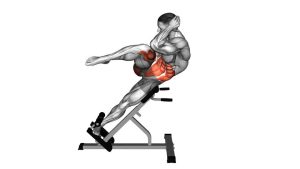
- Start long: Extend your legs forward and keep your core tight.
- Lift the knees: Bend your knees and bring them upward toward your torso.
- Move diagonally: Guide the knees slightly toward one side of your body instead of straight forward.
- Crunch lightly: Let the abs and obliques shorten at the top without forcing a big twist.
- Pause briefly: Hold the top position for a moment to feel the core contraction.
- Return with control: Extend the legs back out slowly without dropping them or relaxing your abs.
- Alternate sides: Repeat the same diagonal knee raise toward the opposite side.
Pro Tips & Common Mistakes
- Use a small diagonal path: A slight cross-body angle is enough to target the obliques.
- Do not swing: Momentum reduces abdominal tension and makes the exercise less effective.
- Control the extension: The lowering phase is where many people lose tension.
- Keep shoulders relaxed: Do not push your neck forward or shrug during the knee raise.
- Avoid excessive rounding: A small crunch is fine, but collapsing the spine can irritate the lower back.
- Breathe with the movement: Exhale as the knees come in, inhale as the legs extend.
- Reduce range if needed: Beginners can keep the feet closer to the floor and use a shorter knee path.
FAQ
What muscles does the Seated Diagonal Knee Raise on Bench work?
It mainly works the abs and obliques. The hip flexors also assist because the knees lift toward the torso. The diagonal angle increases side-core involvement compared with a straight seated knee raise.
Is this exercise good for lower abs?
Yes. The lower portion of the rectus abdominis is heavily involved when you control the knee raise and leg extension. To feel it more in the abs, avoid swinging and keep your pelvis slightly controlled as the knees come in.
Should I twist my torso a lot?
No. The twist should be small and controlled. The goal is a diagonal knee path with light torso rotation, not a large twisting motion that pulls the lower back out of position.
Can beginners do this exercise?
Yes. Beginners can shorten the range of motion, keep the feet closer to the floor, and perform fewer reps. As control improves, the legs can extend farther and the tempo can become slower.
Why do I feel this exercise in my hip flexors?
Some hip flexor involvement is normal because the knees are being lifted. If the hip flexors dominate, slow down, brace harder, and focus on bringing the ribs and pelvis slightly closer together at the top.
Recommended Equipment
- Flat Workout Bench — provides a stable base for seated knee raise and core exercises.
- Adjustable Weight Bench — useful for multiple core, chest, shoulder, and strength exercises.
- Exercise Mat — helpful for warm-ups, floor core work, stretching, and cooldowns.
- Ankle Weights — optional progression once bodyweight reps are controlled and pain-free.
- Resistance Bands Set — useful for pairing this exercise with anti-rotation and full-core training.
Tip: Use equipment only if it improves control. For this movement, clean bodyweight technique is more important than extra resistance.