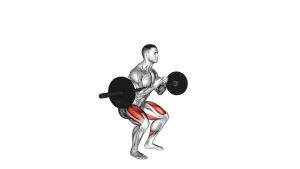
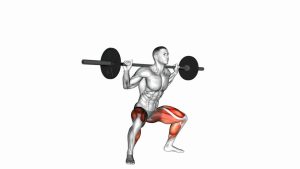
Barbell Narrow Stance Squat: Form, Muscles Worked, Sets & Tips
Learn the Barbell Narrow Stance Squat for stronger quads, better squat control, and lower-body strength with setup, form cues, mistakes, FAQs, and gear.
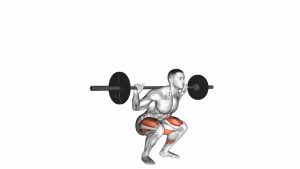
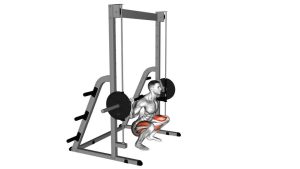
Barbell Narrow Stance Squat
This exercise is best used when you want to build stronger, more developed quads while still training the full squat pattern. Because the stance is narrower than a traditional squat, the knees travel farther forward and the ankles need more mobility. Keep your reps controlled, your heels grounded, and your core braced from start to finish.
Quick Overview
| Body Part | Legs |
|---|---|
| Primary Muscle | Quadriceps |
| Secondary Muscle | Glutes, adductors, hamstrings, calves, core stabilizers |
| Equipment | Barbell, squat rack, weight plates, optional lifting shoes |
| Difficulty | Intermediate |
Sets & Reps (By Goal)
- Strength: 3–5 sets × 3–6 reps with 2–3 minutes rest.
- Muscle growth: 3–4 sets × 8–12 reps with 60–120 seconds rest.
- Technique practice: 2–4 sets × 6–10 reps using light-to-moderate load.
- Quad-focused finisher: 2–3 sets × 12–15 reps with controlled tempo.
Progression rule: Add weight only when every rep stays balanced, your knees track over your toes, and your torso position remains consistent from the first rep to the last.
Setup / Starting Position
- Set the rack height: Position the bar around upper-chest height so you can unrack it without standing on your toes.
- Place the bar: Rest the bar across your upper traps in a high-bar position. Keep your upper back tight.
- Grip the bar: Hold the bar firmly with both hands and pull your elbows slightly down to create upper-back tension.
- Step out carefully: Take one or two short steps back from the rack and settle your balance.
- Set your stance: Place your feet close to hip-width or slightly narrower, with toes slightly turned out.
- Brace your core: Inhale into your abdomen, tighten your midsection, and keep your ribs stacked over your pelvis.
The narrow stance should feel controlled, not cramped. If your heels lift or your knees feel restricted, slightly widen the stance.
Execution (Step-by-Step)
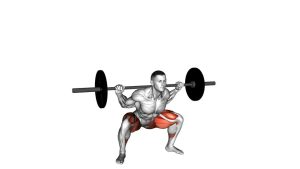
- Start tall: Stand with the bar stacked over your mid-foot, chest lifted, and eyes forward.
- Begin the descent: Bend your knees and hips together while letting the knees travel forward naturally.
- Stay upright: Keep your torso as vertical as your mobility allows without arching or rounding your back.
- Track the knees: Guide your knees in the same direction as your toes. Do not let them cave inward.
- Reach depth: Lower until your thighs are at least parallel, or deeper if you can keep control and heel contact.
- Drive upward: Push through the mid-foot and heels while extending the knees and hips together.
- Finish strong: Stand tall without leaning backward or overextending your lower back.
Pro Tips & Common Mistakes
- Keep the stance narrow but stable: Do not force an extremely close stance if it limits depth or balance.
- Let the knees travel forward: This is normal in a narrow-stance squat and helps load the quads effectively.
- Keep your heels down: Heel lift usually means the load is too heavy, the stance is too narrow, or ankle mobility is limited.
- Avoid knee collapse: Push the knees slightly out so they follow the toe line during both descent and ascent.
- Control the bottom: Do not bounce aggressively. Pause lightly if needed to maintain tension.
- Do not turn it into a good morning: If your hips shoot up first, reduce the load and keep the chest rising with the hips.
- Use lifting shoes if needed: A raised heel can improve depth and help keep the torso upright.
FAQ
What muscles does the Barbell Narrow Stance Squat work?
It primarily targets the quadriceps. The glutes, adductors, hamstrings, calves, and core also assist, but the close stance and upright torso make the quads the main driver.
Is the narrow stance squat better for quads?
Yes, it can be more quad-focused than a wider squat because it usually creates more knee travel and knee flexion. However, proper form and full control matter more than simply making the stance as narrow as possible.
Should my knees go past my toes?
In this exercise, some forward knee travel is expected. The key is to keep the heels down, knees aligned with the toes, and the bar balanced over the mid-foot.
Is this exercise bad for the knees?
It is not automatically bad for the knees, but it can feel stressful if loaded too heavily or performed with poor control. Start light, use a pain-free range, and avoid knee collapse or bouncing.
How narrow should my stance be?
Use a stance around hip-width or slightly narrower. Your stance should still allow you to squat with stable feet, proper knee tracking, and good depth.
Recommended Equipment
- Olympic Barbell — essential for loaded squat training and progressive overload.
- Squat Rack — allows safer unracking, reracking, and heavy squat setup.
- Olympic Weight Plates — useful for gradually increasing training load.
- Weightlifting Shoes — raised heel support can improve depth and upright posture.
- Barbell Collars — help keep plates secure during each set.
Choose equipment that supports stable form first. Better control, safer setup, and consistent progression are more valuable than adding weight too quickly.