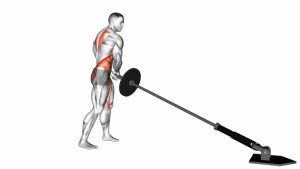
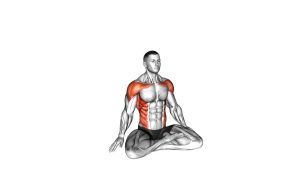
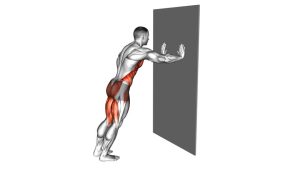
Spell Caster Exercise: Core Rotation, Form, Sets, Tips & FAQ
Learn the Spell Caster exercise for core control, oblique activation, posture, and rotational strength with step-by-step form, tips, FAQs, and equipment.
Spell Caster
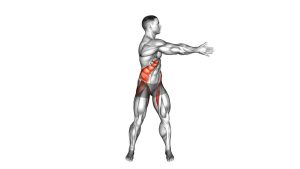
This movement works best when it is performed with clean posture and steady breathing. The arms guide the motion, but the core controls it. Your shoulders should stay relaxed, your chest should remain tall, and your lower back should not arch or collapse as your arms travel through the pattern.
The Spell Caster can be used as a warm-up drill, a core activation exercise, or a low-impact finisher. It is useful for improving rotational awareness, teaching better trunk control, and building coordination between the upper body and the core. Beginners can perform it with bodyweight only. More advanced exercisers can hold a light medicine ball, small dumbbell, or resistance band for added challenge.
Quick Overview
| Body Part | Core |
|---|---|
| Primary Muscle | Obliques, transverse abdominis, rectus abdominis |
| Secondary Muscle | Shoulders, hip stabilizers, spinal erectors, deep trunk stabilizers |
| Equipment | No equipment required; optional light dumbbell, medicine ball, or resistance band |
| Difficulty | Beginner to intermediate, depending on speed, range, and added resistance |
Sets & Reps (By Goal)
- Core activation: 2–3 sets × 8–12 slow reps per direction, using bodyweight only.
- Posture and control: 2–4 sets × 10–15 reps, keeping each circle smooth and steady.
- Rotational endurance: 3–4 sets × 20–30 seconds per side, with light continuous motion.
- Strength progression: 3 sets × 8–12 reps with a light medicine ball or dumbbell.
- Warm-up use: 1–2 sets × 6–10 reps per direction before core, upper-body, or athletic training.
Progression rule: Increase control first, then range, then time, and only then add resistance. If your lower back starts moving more than your core can control, reduce the load immediately.
Setup / Starting Position
- Stand tall: Place your feet about hip-width to shoulder-width apart. Keep your weight balanced through the mid-foot.
- Brace lightly: Tighten your core as if preparing for a gentle cough. Avoid sucking your stomach in or holding your breath.
- Stack your posture: Keep your ribs over your pelvis. Do not let your lower back arch as your arms move.
- Set your shoulders: Relax your neck, pull your shoulders slightly down, and keep your chest open.
- Position your hands: Extend your arms forward or slightly upward. If using equipment, hold it with both hands.
- Choose your range: Start with a small circle or controlled diagonal path before using a larger motion.
Beginner tip: Perform the movement slowly without weight first. You should feel your abs and obliques working, not your lower back taking over.
Execution (Step-by-Step)
- Begin in a tall stance: Stand upright with your feet planted, knees soft, ribs down, and core gently braced.
- Extend your arms: Reach your hands forward while keeping your shoulders relaxed and your neck long.
- Start the casting motion: Move your hands in a smooth circular, diagonal, or sweeping pattern as if drawing a controlled shape in the air.
- Control the trunk: Let your upper body rotate only slightly. Your core should guide the motion instead of letting your spine twist loosely.
- Keep your hips quiet: Avoid swinging your pelvis side to side. Your hips should stay mostly square and stable.
- Breathe through the movement: Exhale as the arms travel through the hardest part of the pattern. Inhale as you reset or continue smoothly.
- Reverse direction: After completing the target reps or time, repeat the same pattern in the opposite direction.
- Finish under control: Bring your arms back to the starting position without dropping your posture or relaxing your brace too quickly.
Pro Tips & Common Mistakes
Pro Tips
- Move slowly first: Slow reps build better control than fast, sloppy circles.
- Keep your ribs down: This helps prevent lower-back arching during the arm sweep.
- Use your breath: Exhale during the most challenging part of the movement to improve bracing.
- Start with small shapes: A smaller pattern is easier to control and safer for beginners.
- Train both directions: Reverse the motion to balance coordination and oblique activation.
- Add load carefully: Use a light object only when bodyweight reps feel smooth and stable.
Common Mistakes
- Arching the lower back: This usually means the range is too large or the core is not braced enough.
- Swinging with momentum: Fast movement reduces core tension and turns the exercise into an arm swing.
- Shrugging the shoulders: Keep your neck relaxed and avoid pulling your traps toward your ears.
- Rotating the hips too much: The hips should stay stable while the trunk controls the pattern.
- Using too much weight: Heavy loads can pull you out of alignment and stress the lower back.
- Holding your breath: Breath-holding creates unnecessary tension and makes the movement less smooth.
FAQ
What muscles does the Spell Caster exercise work?
The Spell Caster mainly works the obliques, transverse abdominis, and other deep core stabilizers. It also involves the shoulders, upper back, hips, and spinal stabilizers because the body must stay controlled while the arms move through space.
Is the Spell Caster good for beginners?
Yes. Beginners can perform it without equipment and use a small range of motion. The key is to keep the movement slow, controlled, and pain-free. Once posture and control improve, you can increase the range or add a light load.
Should I use weight for the Spell Caster?
You do not need weight at first. Bodyweight is enough for learning the pattern. If you can maintain stable ribs, quiet hips, and smooth breathing, you may progress with a light dumbbell, medicine ball, or resistance band.
Why do I feel this exercise in my lower back?
Lower-back tension usually means you are arching, rotating too aggressively, or using too much momentum. Reduce the range, slow the movement, brace your core, and keep your ribs stacked over your pelvis.
Can the Spell Caster help with rotational strength?
Yes. It helps develop rotational awareness and trunk control. However, it should be performed with precision. For stronger athletic rotation, combine it with anti-rotation presses, cable chops, medicine ball throws, and controlled strength training.
Recommended Equipment (Optional)
- Medicine Ball — useful for adding light resistance to controlled rotational core drills.
- Light Dumbbell Set — allows gradual progression once bodyweight Spell Casters feel stable.
- Resistance Bands Set — helpful for anti-rotation work, band chops, and core stability progressions.
- Exercise Mat — provides a comfortable training area for warm-ups, mobility, and core sessions.
- Adjustable Kettlebell — can support advanced standing core, loaded carries, and rotational strength work.
Tip: Keep resistance light for this exercise. The Spell Caster rewards smooth control, not heavy loading.