Straight-Leg Sit-Up: Proper Form, Core Benefits, Sets, Tips & FAQ
Learn the Straight-Leg Sit-Up for stronger abs and better core control. Includes form steps, sets by goal, mistakes, FAQs, and equipment.
Straight-Leg Sit-Up
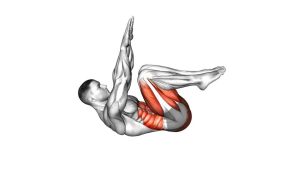
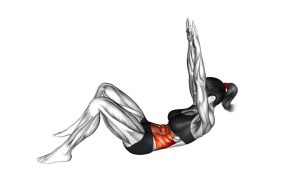
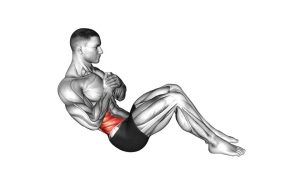
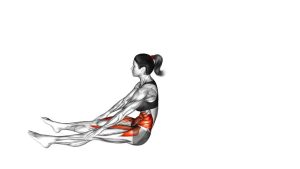
This movement is best performed with smooth control from start to finish. First, the arms travel from overhead toward the legs. Then, the head, shoulders, and torso lift from the floor until the body reaches a seated position. Finally, the torso lowers back down while the arms return overhead. Throughout the full repetition, the legs remain straight and grounded.
Quick Overview
| Body Part | Core |
|---|---|
| Primary Muscle | Rectus abdominis |
| Secondary Muscle | Hip flexors, deep core stabilizers, obliques |
| Equipment | None; optional exercise mat |
| Difficulty | Beginner to intermediate |
Sets & Reps (By Goal)
- Beginner core control: 2–3 sets × 6–10 reps, resting 45–75 seconds between sets.
- Muscle endurance: 3–4 sets × 10–15 reps with a steady tempo and controlled descent.
- Core strength: 3–5 sets × 6–12 reps, using a slow 2–3 second lowering phase.
- Bodyweight circuit: 2–4 rounds × 20–40 seconds, keeping every rep clean and smooth.
Progression rule: Add reps only when you can lift and lower without swinging your arms, bending your knees, or letting your lower back collapse aggressively into the floor.
Setup / Starting Position
- Lie flat on your back: Extend both legs straight on the floor with the feet close together.
- Reach your arms overhead: Keep the arms long and aligned near your ears.
- Set your core gently: Brace your abs lightly before lifting so your torso moves as one controlled unit.
- Keep the neck neutral: Avoid pulling the head forward before the torso starts to rise.
- Prepare for a smooth sit-up: Start from a fully lengthened position, then move without bouncing.
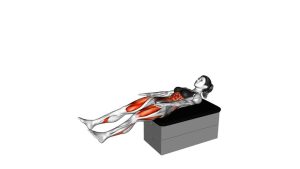
In the uploaded video, the exercise starts with the body fully extended: arms overhead, legs straight, and the back resting on the floor.
Execution (Step-by-Step)
- Start from the floor: Keep your legs straight and your arms extended overhead.
- Begin the lift: Swing the arms forward in a controlled way while the head and shoulders rise from the floor.
- Curl through the torso: Continue lifting your upper back and mid-back until your torso moves toward seated.
- Reach forward: At the top, extend the arms forward toward the legs while keeping both legs grounded.
- Pause briefly: Hold the seated position for a short moment without collapsing or jerking.
- Lower with control: Slowly roll the torso back down while the arms return overhead.
- Reset fully: Finish flat on the floor with the legs still straight before beginning the next rep.
Pro Tips & Common Mistakes
- Use your abs, not momentum: Although the arms move forward, they should not whip the torso up aggressively.
- Keep the legs straight: Bending the knees changes the exercise and reduces the straight-leg challenge.
- Control the lowering phase: Lowering slowly increases core tension and protects the lower back.
- Avoid neck pulling: Keep the head moving naturally with the torso instead of leading with the chin.
- Do not rush reps: Faster reps often lead to swinging, bouncing, and reduced abdominal control.
- Exhale as you rise: Breathing out during the lift can help the abs contract more effectively.
- Keep the feet grounded: If the legs lift, reset your brace and slow the repetition down.
FAQ
What muscles does the Straight-Leg Sit-Up work?
The Straight-Leg Sit-Up mainly targets the rectus abdominis. However, the hip flexors and deep core stabilizers also assist because the legs stay extended while the torso lifts.
Is the Straight-Leg Sit-Up good for beginners?
Yes, it can be beginner-friendly when performed slowly and with a limited range if needed. However, beginners should focus on control first instead of high reps.
Should my legs lift during the exercise?
No. In this variation, the legs remain straight and grounded throughout the movement. If your legs lift, slow down and reduce momentum.
Why do I feel my hip flexors during Straight-Leg Sit-Ups?
Some hip flexor involvement is normal because the torso is moving from a lying position into a seated position. Even so, your abs should still feel like the main working area.
How can I make the Straight-Leg Sit-Up easier?
Use a smaller range of motion, move slower, or perform partial sit-ups until your core strength improves. Also, avoid using speed to complete the rep.
Recommended Equipment (Optional)
- Exercise Mat — adds comfort for your spine, hips, and shoulders during floor-based core work.
- Thick Yoga Mat — useful if you need extra cushioning while performing sit-ups on hard flooring.
- Non-Slip Workout Mat — helps keep your body stable during repeated core movements.
- Ab Mat — can support the lower back during some sit-up variations, depending on comfort and control.
- Core Sliders — useful for pairing this exercise with other floor-based core progressions.
Tip: Equipment is optional. For this exercise, the most important factor is a stable floor surface that allows you to lift and lower your torso without slipping.