Band Horizontal Pallof Press: Core Anti-Rotation Form, Sets & Tips
Learn the Band Horizontal Pallof Press for stronger obliques, core stability, posture, and anti-rotation control with proper form, sets, tips, FAQ, and equipment.
Band Horizontal Pallof Press
This exercise is especially useful for athletes, lifters, desk workers, and beginners who need better core control without doing endless crunches. Since the band pulls from the side, your core must create stability in the opposite direction. That makes the Band Horizontal Pallof Press excellent for teaching bracing, improving posture, building rotational control, and strengthening the muscles that protect the spine during daily movement and training.
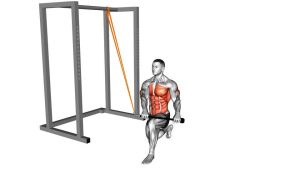
In the uploaded video, the movement shows a clean standing setup. The band is anchored at chest height, the hands begin close to the sternum, and the arms press straight forward until fully extended. The body remains square during the press and the return. This is exactly the main purpose of the exercise: the arms move, but the torso does not twist.
Quick Overview
| Body Part | Core |
|---|---|
| Primary Muscle | Obliques, especially internal and external obliques |
| Secondary Muscle | Transverse abdominis, rectus abdominis, glutes, hip stabilizers, shoulders, chest, and upper back |
| Equipment | Resistance band and a stable anchor point |
| Difficulty | Beginner to Intermediate |
Sets & Reps (By Goal)
- Core activation: 2–3 sets × 8–10 reps per side with a slow press and controlled return.
- Anti-rotation strength: 3–4 sets × 10–12 reps per side with a 1–2 second hold at full extension.
- Posture and control: 2–3 sets × 8–12 reps per side using light band tension and perfect alignment.
- Athletic core stability: 3–5 sets × 6–10 reps per side with stronger band tension and a firm brace.
- Warm-up or movement prep: 1–2 sets × 8 reps per side before squats, deadlifts, presses, rows, or rotational sports work.
Progression rule: First improve control, then add a longer hold, then step farther from the anchor. Only increase band tension when your hips, ribs, shoulders, and hands stay aligned.
Setup / Starting Position
- Anchor the band at chest height: Attach a resistance band to a stable post, rack, door anchor, or cable-style anchor point. The band should line up with the center of your chest.
- Stand side-on to the anchor: Turn your body so the anchor is beside you, not in front of you. This creates the anti-rotation challenge.
- Grip the band with both hands: Hold the band handle or loop with both hands at sternum level. Keep your elbows bent and close to the ribcage.
- Step away to create tension: Move away from the anchor until the band pulls sideways with moderate tension. Do not choose tension that forces you to lean or twist.
- Set your stance: Place your feet about shoulder-width apart. Keep your knees slightly bent, hips level, and weight evenly distributed.
- Brace before pressing: Lightly tighten your abs as if preparing for a small push. Keep your ribs down, chest proud, and spine neutral.
- Relax your shoulders: Pull the shoulders gently away from the ears. Your arms should press the band, but your neck should not become tense.
Execution (Step-by-Step)
- Begin with the band at your chest: Keep both hands close to the sternum. Your elbows should be bent, and your torso should face straight ahead.
- Brace your core: Gently tighten the abs, squeeze the glutes lightly, and keep your ribs stacked over your pelvis.
- Press straight forward: Extend your arms directly in front of your chest. The hands should travel in a straight horizontal line, not upward, downward, or sideways.
- Resist the band’s pull: As your arms extend, the band will try to rotate your torso toward the anchor. Keep your shoulders, ribs, hips, and knees facing forward.
- Reach full extension: Stop when your arms are straight but not locked aggressively. Keep the hands centered with the chest.
- Hold briefly: Pause for 1–2 seconds while breathing calmly. This hold is where the anti-rotation demand is highest.
- Return with control: Bend your elbows and bring your hands back to your chest. Do not let the band snap you back.
- Reset your posture: Check that your torso is still square before beginning the next rep.
- Repeat on both sides: Turn around and perform the same number of reps facing the opposite direction so both sides of the core are trained evenly.
Pro Tips & Common Mistakes
Pro Tips
- Use a slow tempo: Press out for 1–2 seconds, hold briefly, then return for 2–3 seconds. This makes the core work harder without needing extreme band tension.
- Keep the hands centered: Your hands should stay in line with your sternum. If they drift toward the anchor, the band is controlling you.
- Brace without holding your breath: Maintain abdominal tension while breathing through each rep. A quiet exhale at full extension can improve control.
- Use your glutes: Light glute engagement helps stop the pelvis from rotating or shifting.
- Start lighter than expected: This is a stability drill. Clean alignment matters more than heavy resistance.
- Train both sides equally: Since the band pulls from one side, always repeat the same sets and reps with the anchor on the other side.
Common Mistakes
- Rotating the torso: If your chest turns toward the anchor, reduce tension and focus on staying square.
- Leaning away from the band: Leaning is compensation. Stand tall and let your core resist the pull.
- Pressing too high or too low: Keep the band at chest height and press horizontally from the sternum.
- Shrugging the shoulders: Shoulder elevation adds neck tension and reduces core focus. Keep the neck long.
- Using too much band tension: Heavy tension often causes twisting, rib flare, or loss of balance.
- Rushing the return: The return phase is just as important as the press. Control the band all the way back.
FAQ
What muscles does the Band Horizontal Pallof Press work?
The Band Horizontal Pallof Press mainly targets the obliques and transverse abdominis. It also trains the rectus abdominis, glutes, hip stabilizers, shoulders, chest, and upper back because the whole body must resist rotation.
Is the Band Horizontal Pallof Press good for beginners?
Yes. It is beginner-friendly when performed with light band tension and controlled form. Beginners should start close to the anchor, use a stable stance, and focus on keeping the torso still during each press.
Should I feel the Pallof Press in my arms or core?
You may feel some shoulder and chest involvement because the arms press the band forward. However, the main challenge should be in the core, especially the side of the abs resisting rotation.
How far should I stand from the band anchor?
Stand far enough to feel moderate sideways pull, but not so far that you rotate, lean, or lose your posture. If your hands drift or your ribs flare, step closer to the anchor.
Can I do the Band Horizontal Pallof Press every day?
You can use it frequently as a low-impact core activation drill, especially with light tension. For harder anti-rotation strength work, use it 2–4 times per week with rest between challenging sessions.
Is the Pallof Press better than crunches?
It trains the core differently. Crunches focus more on spinal flexion, while the Pallof Press trains anti-rotation stability. For complete core development, both movement types can be useful, but the Pallof Press is often better for posture, bracing, and functional stability.
Why does my body twist during the movement?
Twisting usually means the band tension is too strong, your stance is too narrow, or your brace is not set before pressing. Use lighter resistance, widen your stance slightly, and press more slowly.
Recommended Equipment
- Resistance Bands with Handles — ideal for Pallof presses because the handles give a secure grip and smooth pressing path.
- Door Anchor for Resistance Bands — useful for setting the band at chest height when training at home.
- Loop Resistance Bands Set — a simple option for Pallof presses, rows, pull-aparts, and full-body band training.
- Wall-Mount Resistance Band Anchor — provides a stable anchor point for consistent horizontal band tension.
- Non-Slip Exercise Mat — improves foot grip and comfort during standing, kneeling, or half-kneeling Pallof variations.
Choose equipment that lets you anchor the band safely at chest height. The anchor should not move, slide, or detach during the press.