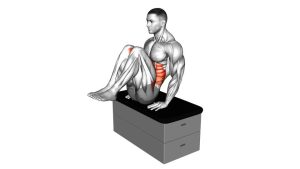
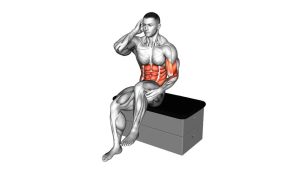
Sitting Swimming Knee Raise on a Chair: Form, Core Benefits, Sets & Tips
Learn the Sitting Swimming Knee Raise on a Chair for core control, hip flexors, shoulder coordination, safe seated form, sets, tips, and FAQ.
Sitting Swimming Knee Raise on a Chair
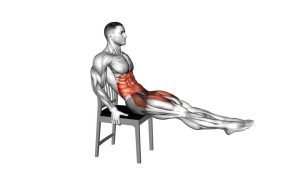
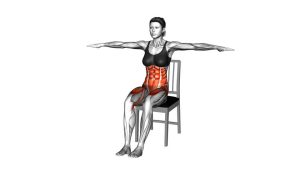
This exercise works best when the torso stays tall and the movement stays controlled. Although the legs and arms move together, the main goal is not speed. Instead, focus on keeping your ribs steady, lifting each knee with control, and moving the arms in a clean backward-and-forward pattern. Because you are seated, this exercise is also useful for beginners, chair workouts, low-impact routines, and short movement breaks.
Quick Overview
| Body Part | Core |
|---|---|
| Primary Muscle | Abdominals and hip flexors |
| Secondary Muscle | Shoulders, quadriceps, upper back, and postural stabilizers |
| Equipment | Chair |
| Difficulty | Beginner |
Sets & Reps (By Goal)
- Beginner control: 2–3 sets × 8–10 reps per side, using a slow and steady tempo.
- Core endurance: 3–4 sets × 12–16 total alternating reps, resting 45–60 seconds between sets.
- Coordination practice: 2–3 sets × 30–45 seconds, focusing on smooth arm-leg timing.
- Low-impact cardio finisher: 3–5 rounds × 30 seconds, resting 30 seconds between rounds.
Progression rule: First improve posture and timing. After that, increase total reps or time. Avoid rushing the movement just to make it harder.
Setup / Starting Position
- Choose a stable chair: Sit on a firm chair with your feet flat on the floor.
- Sit tall: Keep your chest lifted, ribs controlled, and spine long.
- Place your feet under your knees: This gives you a balanced starting base before each knee raise.
- Extend your arms forward: Start with both arms reaching forward around shoulder height.
- Brace lightly: Tighten your core just enough to stop your torso from rocking backward.
Tip: Sit closer to the front half of the chair if it helps your legs move freely. However, keep enough support under your hips for balance.
Execution (Step-by-Step)
- Start seated and steady: Keep both feet on the floor and both arms extended forward.
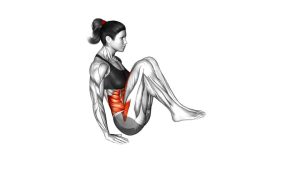
- Lift one knee: Raise one knee upward toward your torso while keeping your upper body tall.
- Move the arms back: As the knee lifts, pull both arms backward in a swimming-style motion.
- Pause briefly: Hold the top position for a short moment without leaning back or shrugging.
- Return with control: Lower the raised foot back to the floor while the arms reach forward again.
- Switch sides: Repeat the same pattern with the opposite knee.
- Continue alternating: Keep the movement smooth, rhythmic, and controlled from side to side.
Pro Tips & Common Mistakes
- Keep your spine tall: Avoid rounding your lower back as the knee lifts.
- Do not swing the leg: Lift the knee using control instead of momentum.
- Match the arm rhythm: Arms move back as the knee rises, then forward as the foot returns.
- Relax your shoulders: Avoid shrugging toward your ears during the swimming motion.
- Use a smaller range when needed: A clean low knee raise is better than a high knee lift with poor posture.
- Keep breathing: Exhale gently as the knee rises, then inhale as you reset.
- Control the foot landing: Place the foot down softly instead of dropping it.
FAQ
What muscles does the Sitting Swimming Knee Raise on a Chair work?
It mainly works the abdominals and hip flexors. Additionally, the swimming-style arm motion involves the shoulders, upper back, and postural muscles.
Is this exercise good for beginners?
Yes. Because it is performed seated, it is beginner-friendly and low-impact. However, beginners should move slowly and keep the knee raise moderate until coordination improves.
Should I lean back during the knee raise?
No. Try to keep your torso upright and stable. If you lean back, the movement becomes less controlled and may reduce core engagement.
Can I use this exercise as a desk break?
Yes. It works well as a short desk-break movement because it uses only a chair and does not require floor space. Keep the effort light if you are using it during the workday.
How can I make the exercise harder?
First, increase the time or reps. Then, slow the lowering phase, pause longer at the top, or use a slightly higher knee lift. Still, avoid adding speed if it causes swinging.
Recommended Equipment
- Sturdy Workout Chair — gives a stable base for seated knee raises and chair-based workouts
- Non-Slip Exercise Mat — helps keep the chair and feet from sliding during seated movement
- Mini Resistance Bands — useful for progressing seated hip flexor and lower-body activation drills
- Light Dumbbells Set — optional tool for future seated arm and shoulder variations
- Fitness Interval Timer — helps track timed sets, desk-break rounds, and low-impact circuits
Tip: This exercise does not require equipment beyond a stable chair. Extra tools should only support safety, consistency, or future progressions.