Lying Crunch Straight Legs: Form, Benefits, Sets, Tips & FAQ
Learn the Lying Crunch Straight Legs to target your abs with controlled upper-body flexion. Includes setup, reps, mistakes, FAQs, and gear.
Lying Crunch (Straight Legs)
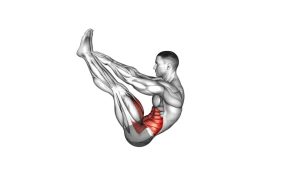
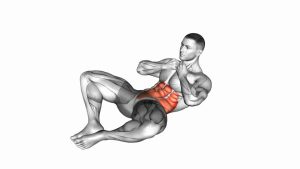
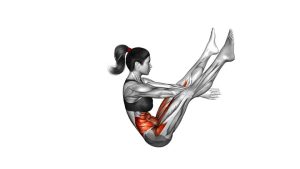
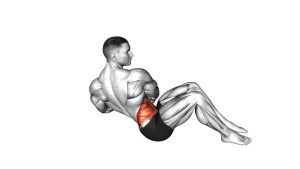
This exercise works best when the movement stays short, smooth, and controlled. Instead of pulling the neck or swinging the body upward, focus on lifting the head and shoulders by contracting the abs. Meanwhile, keep your legs straight and steady so the crunch stays clean.
Quick Overview
| Body Part | Abs |
|---|---|
| Primary Muscle | Rectus abdominis |
| Secondary Muscle | Deep core stabilizers and hip flexors as stabilizers |
| Equipment | None; optional exercise mat for comfort |
| Difficulty | Beginner to intermediate |
Sets & Reps (By Goal)
- Beginner control: 2–3 sets × 8–12 reps with slow, clean form.
- Core endurance: 3–4 sets × 12–20 reps with steady breathing.
- Ab activation warm-up: 1–2 sets × 10–15 reps before a core workout.
- Tempo focus: 3 sets × 8–10 reps using a 2-second lift and 3-second lower.
Progression rule: Add reps first. Then, increase control by slowing the lowering phase. Finally, add a brief squeeze at the top if your neck and lower back stay relaxed.
Setup / Starting Position
- Lie on your back: Use a flat surface and keep your torso centered.
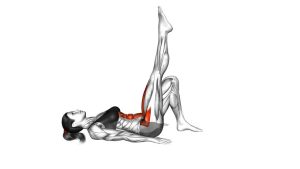
- Raise both legs: Extend your legs straight upward, keeping them together and steady.
- Place hands behind the head: Let the hands support lightly without pulling.
- Open the elbows: Keep the elbows slightly flared rather than forcing them forward.
- Brace gently: Draw the ribs down and prepare to curl the upper torso off the floor.
Keep the legs as still as possible. This helps the abs do the work instead of turning the exercise into a swinging movement.
Execution (Step-by-Step)
- Start flat: Lie back with your legs straight and raised vertically.
- Begin the crunch: Exhale as you lift your head and shoulders off the floor.
- Curl upward: Move your upper torso toward your legs while keeping the lower body stable.
- Squeeze the abs: Pause briefly at the top without pulling on your neck.
- Lower with control: Slowly return your shoulders to the floor while keeping your legs raised.
- Repeat smoothly: Continue for the target reps without rushing or bouncing.
Pro Tips & Common Mistakes
- Do not pull the head: Your hands should support, not yank, the neck.
- Keep the movement small: A crunch is not a full sit-up, so lift only the upper back.
- Control the legs: Keep both legs straight and vertical throughout the rep.
- Exhale on the lift: This helps the ribs move down and improves abdominal contraction.
- Avoid momentum: Move slowly so the abs, not swinging force, create the lift.
- Relax the shoulders: Do not shrug hard toward the ears.
- Protect the lower back: If the back arches strongly, bend the knees slightly or reduce the range.
FAQ
What muscles does the Lying Crunch (Straight Legs) work?
It mainly works the rectus abdominis, especially through upper-body flexion. Additionally, the deep core helps stabilize the torso while the legs stay raised.
Should my legs move during the exercise?
No. Based on the visible exercise pattern, the legs stay straight and elevated while the upper torso performs the crunch. Therefore, leg movement should be minimal.
Is this exercise good for beginners?
Yes, it can be beginner-friendly when performed slowly. However, if straight legs create too much tension, bend the knees slightly until your core control improves.
Why do I feel this in my neck?
Neck tension often happens when you pull the head with your hands or lead the movement with the chin. Instead, keep the hands light and lift from the ribs and abs.
Can I do this exercise every day?
You can practice it frequently at low volume. Still, for harder sets, allow recovery and combine it with other core patterns such as planks, dead bugs, and controlled leg raises.
Recommended Equipment
- Exercise Mat — adds comfort for your spine, shoulders, and hips during floor crunches.
- Thick Yoga Mat — useful if you need extra cushioning for repeated ab workouts.
- Workout Interval Timer — helps manage rest periods, tempo sets, and core circuits.
- Resistance Bands Set — helpful for pairing this crunch with full core and posture training.
- Adjustable Ankle Weights — optional advanced tool only after you can keep the legs stable with perfect control.
Tip: Start with only a mat. Then, add optional tools later if your form remains controlled and pain-free.